

January hits, and suddenly everyone's motivated. New gym membership? Bought. Fresh sneakers? Unboxed. Big promises to yourself? Made. Then life creeps back in. Work deadlines pile up, a few workouts get skipped, and somewhere between week three and week six, the whole thing quietly falls apart.
If that hits close to home, you are in good company. Most Americans set health and fitness goals every year, yet the majority abandon them well before summer. And honestly, the problem usually is not effort or discipline. More often than not, it comes down to how those goals were built from the start. Keep reading for the most practical tips for setting fitness goals that hold up when real life gets in the way.
When most people think about how to set fitness goals, they start with the what. Lose some weight. Run a 5K. Get to the gym more. That part comes easy. The harder question, the one that actually determines whether you follow through, is why any of it matters to you personally.
Goals backed by a genuine reason hold up differently. Wanting more energy to keep up with your kids, managing stress, sleeping better, and feeling stronger in everyday life, these kinds of reasons keep you moving even when motivation dips. Compare that to goals built around a number on a scale or a look you saw on social media. Those tend to crumble the moment progress slows down.
Behavioral researchers have long observed that people who connect fitness to their sense of identity, thinking of themselves as someone who stays active rather than someone trying to get fit, build habits that last. The internal wording matters more than it might seem.
So, before you touch a single fitness planning tip or map out a training schedule, take five minutes and write down the real reason behind your goal. Not the Instagram-worthy version. The honest one. That answer becomes your anchor on the days when skipping feels way too easy.
Walk into any gym in January, and you will hear plenty of big goals. Very few of them are specific enough to act on. That is exactly where setting SMART fitness goals helps, and why it remains one of the most dependable fitness goal-setting tips for beginners out there.
SMART breaks down into five pieces: Specific, Measurable, Achievable, Relevant, and Time-Bound. In plain terms, a good fitness goal clearly states what you are working toward, gives you a way to track progress, matches your actual starting point, connects to something you genuinely care about, and comes with a deadline.
Swap "I want to get fit" for "I will strength train three times a week for the next eight weeks." That second version tells you exactly what to do, when to do it, and when to evaluate. No guesswork. No drifting. Just a clear path forward.
This is one of the core principles behind how to set fitness goals that stick. Vague goals produce vague results. Specific ones give you something real to chase.
Nobody talks about this one enough, but having too many fitness goals running at the same time is a fast track to burning out and quitting everything.
It is a pattern coaches see constantly. Someone kicks off the year chasing five different targets: weight loss, strength gains, better cardio, a race sign-up, and daily stretching, and by March, they have made little progress on any of them and feel terrible about it. Spreading focus that thin rarely works in fitness or anywhere else.
Among the most practical fitness planning tips: narrow it down to one or two things that genuinely matter right now. If you have multiple events or goals pulling at you, pick a main focus and let the rest play a supporting role.
And give yourself room to breathe. Injuries happen. Work gets overwhelming. Family stuff comes up. A goal with no flexibility bends until it breaks. Building a little wiggle room into your plan is not giving yourself an out. It is giving your goal a realistic shot at surviving contact with real life.
Here is something counterintuitive: one of the best ways to hit a big fitness goal is to temporarily stop staring at it.
Big goals are motivating in the abstract. But standing at the starting line of a six-month plan, that same goal can feel paralyzing. Micro goals fix that. A micro goal is a small, concrete action that nudges you forward this week, not six months from now.
Working on how to achieve fitness goals at this level looks like this. Your big goal is to run a 5K by spring. This week's micro goal is to jog for 15 minutes on three separate days. That is it. Simple, complete, and repeatable.
Small wins do more than move you forward physically. They build the kind of confidence that makes the next week easier and the one after that easier still. This is one of those fitness goal-setting tips for beginners that sounds almost too simple, but the consistency it creates is exactly what long-term results are built on.
Knowing how to set fitness goals well is one piece. Maintaining the follow-through over weeks and months is the other, and it deserves just as much attention.
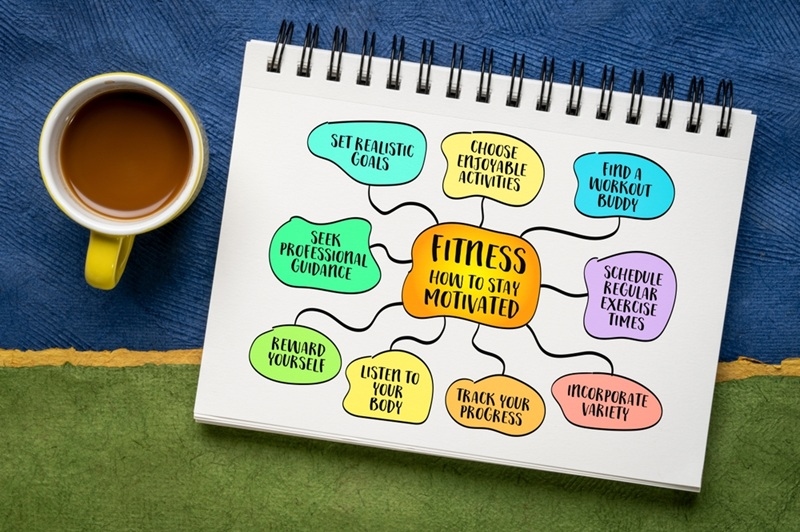
Writing things down works. Log your workouts, track the weights you are lifting, note how runs are feeling. Progress often happens gradually enough that it is invisible day to day. A log makes it visible and gives you real evidence to lean on when motivation dips.
Having someone else in the loop helps too. A gym buddy, a coach, or even just an app that tracks your streaks creates a layer of accountability that solo willpower often cannot match. That outside check-in keeps small lapses from becoming full stops.
Stay open to adjusting the goal itself. Life shifts, priorities change, and a goal that made perfect sense in January might need reworking by April. Tweaking a goal is not quitting. It is good judgment. Pair all of this with decent sleep, rest days, and food that actually fuels you. Those are not optional extras. They are part of what makes any fitness plan work. Treating them as rewards misses the point entirely. These are the overlooked fitness planning tips that separate people who see lasting change from those who keep starting over.
You may also like: 30 Day Cardio Challenge at Home Without Using Any Equipment
Good fitness goals do not come from inspiration alone. They come from honest self-reflection, a clear structure, and a plan that fits around your actual life. Tie every goal to a real personal reason, use the SMART method to sharpen it, keep your focus narrow, build momentum through small wins, and track your progress as you go. The most effective tips for setting fitness goals all circle back to one thing: showing up consistently matters far more than going all-out occasionally. Pick one goal, write it down today, and take the first step.
Personal readiness matters far more than the calendar. A goal that grows out of a real moment, a health scare, a season change, a meaningful birthday, tends to stick longer than one set because January 1st felt like the right time to start fresh.
It is worth considering, especially early on. A trainer can spot movement habits that lead to injury, set realistic starting targets, and keep early sessions productive. A lot of gyms offer one free consultation, and that single conversation can save months of trial and error.
They are tightly linked. A nutrition habit that supports your training, like prioritizing protein if you are building strength, makes physical results come faster and feel more sustainable. Treating food and fitness as two separate missions usually slows both down.
This content was created by AI